One of the joys of visiting and revisiting places is that I get to see the same people time after time. I will be talking about the people I met in Quito, but to preserve their privacy, I won’t identify any of them.
The Quito Jewish Community has two major elements:
1. The large indigenous community that has a beautiful community center and a synagogue and lovely grounds. People in the community are of European origin, most of their families arriving before or during the Second World War. They number around 500 and have a community school of high academic quality that has a non-Jewish majority and afternoon religious school for other children in the Jewish community. The community is a Conservative community and so people who live throughout the Quito area can belong and attend services there. We were lucky enough to visit their complex and to see their synagogue.
After entering the complex, one sees two buildings with a patio area between them. To the left is the huge auditorium/banquet hall, said to the be second largest banquet hall in Quito. On the lower floor is a room that we used for lunch. It was also large and because the building was built on the side of a hill, it had large windows and an outdoor area as well. Further to the left outside is the swimming pool.
On the right is the synagogue building itself. Although the congregation president did speak with us about the community, we were not able to take a full tour of the facilities since we still had a lot to do and wanted to get back to the hotel well before shabbat so that people would have time to prepare.
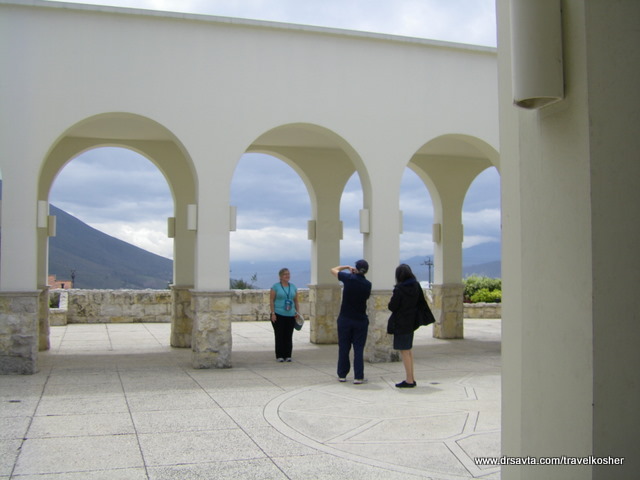
The synagogue grounds

The doors and entrance hall
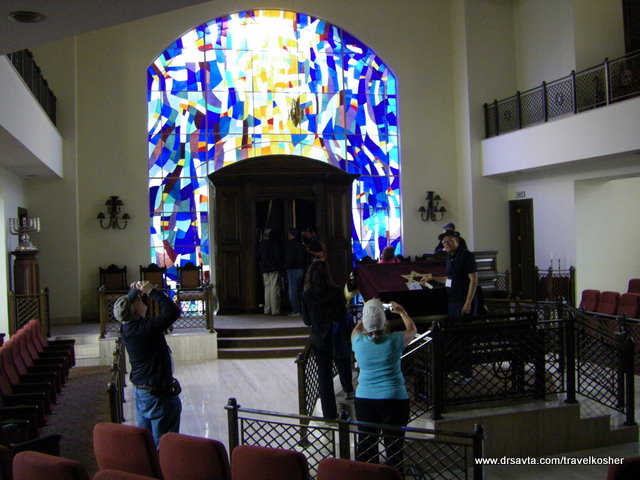
The synagogue interior

Synagogue under attack by camera-wielding tourists

The inside of the domed roof
2. The Israeli/Orthodox element
The first two times I visited Quito, I became acquainted with these people. They are almost all ex-patriots living in Quito for various reasons. Although it is possible to acquire many kosher products in Quito, the lack of the thriving Orthodox community means that they need to rely on each other to be neighbors, friends, and family. They do not have a synagogue and so they lean on each other when they need strength. Watching them interacting with each other is something special. They have become a family, accepting of each other, caring, and warm. They enjoy seeing and playing with each other’s children. When they came to spend shabbat with us, the visiting Israelis/ Australians/ Americans they were open and friendly and simply nice people. They joined in our tfilot (prayers), zmirot (songs), and divrei torah (homilies.) By now, returning to Quito is a bit like visiting family.
Recent Comments