Just outside of SaPa

When we travel to Vietnam, one of the highlights of the trip is our visit to SaPa. We leave from Hanoi in the evening and take a sleeper train north to Lao Cai. Lao Cai is not far from the border with China and as we make our way from Lao Cai to SaPa, the landscape is magnificent. There are majestic mountains and many of them are terraced to grow rice.

Rice is produced in several areas of Vietnam. There are two main river deltas: the Red River Delta and the Mekong Delta. Both of these have fertile soil in which rice is grown. In fact, one way of conceptualizing Vietnam is as one of those poles with buckets on both sides. In the northeast, the rice bucket is the Red River Delta and in the south, it is the Mekong Delta. However, in addition to those two regions, rice is also grown in the mountainous areas of the north. As in China, the terraces are carved into the mountains as if by artists. These terraces are planted by hand and then flooded with water until the rice is sufficiently mature to be picked. In Vietnam, as in China, rice production is not yet mechanized.

Here is one picture:

Rice Terraces near SaPa

Rice Terraces near SaPa

This picture was taken in the morning as the valley was filled with sun. On this tour, we had two groups traveling together, mine, an English speaking group and Rita’s, a French speaking group. In this picture you see me and Rita– what she lacks in height, she more than makes up for in personality and warmth!

Rita and Rona near SaPa

Rita and Rona near SaPa

Coming up: Some pictures from villages of minority groups in the SaPa area.

A “Jewish” mosque in Xian

One of the cities I love to visit in China is the city of Xian. It was one of the capitals of China and it is the place where Qin Shi Huangdi, the first emperor had his Forbidden City. It is just outside of Xian that his tomb is located and one day soon, I will talk about it and about how it is one of the wonders of the world.

But today, I want to talk about the mosque. You see, in China, beginning with the spice and silk traders, there arose a community of Jews. This community was documented to exist in the 12th century, but probably was much older. It consisted of Jewish traders and often the local Chinese women they married. As did every other Jewish community, they built a synagogue. The synagogue was built in the style of important Chinese buildings, incorporating the elements of feng shui. It was largely a rectangular garden whose sides were longer and whose front and back were shorter– with a series of gates beginning at the front that led through three courtyards, all beautifully planted, toward the back with small structures in the center that one could walk through. Along both long sides, there were buildings in which there were places for caretakers of the synagogue to live, places to wash ones hands (and probably mikvaot), and places for receptions. At the back, there was a large building which was the place where the services were held. Unfortunately, the synagogue was located not far from a river that would overflow from time to time and several times during its history, the synagogue was destroyed.

There were, however, sketches of the synagogue done by a Jesuit Priest, Father Matteo Ricci who met the head of the community when he, Ai Tian, went to Beijing, hearing that there were other people who read the Bible and worshiped one G-d. There was some misunderstanding as Ai Tian believed that Father Ricci was Jewish and he even went so far as to ask Father Ricci to become their Rabbi! Father Ricci traveled to Kaifeng to visit the synagogue and ultimately made the world aware of the community.

By the mid 19th century, the synagogue fell into disrepair and by then there was no rabbi serving the community. No one but the rabbi knew how to read the torah. The community sold their sifrei torah which can now be found in many places throughout the world.

So what does this have to do with a mosque in Xian? The mosque was built as a near replica of the Kaifeng synagogue.

For this reason, a visit to the mosque is a “must” if one wants to understand the experience of the Jews who once lived in China. Here are some pictures of the mosque in Xian that was built in a similar manner to the synagogue in Kaifeng.


The first picture is of the entrance gate to the mosque/synagogue. The second picture is of one of the gates to an internal courtyard. The third picture is of the plaza outside of the main building where wedding ceremonies were held, where sukkot were built, and which was decorated with flowers on Shavuot!

There is much more to learn about this community and about Jews in China through the ages. One place to get a taste of it is here.

Hello world!

Welcome to a blog that will be taking you to China, Vietnam, and Cambodia. Not only will I be talking about the rich cultures of these three magnificent countries, but I will be talking about the wonderful warm people, the beautiful sights, and the very special experiences of traveling there– and remaining able to eat freshly prepared, healthy kosher food! You can find a list of our tours here

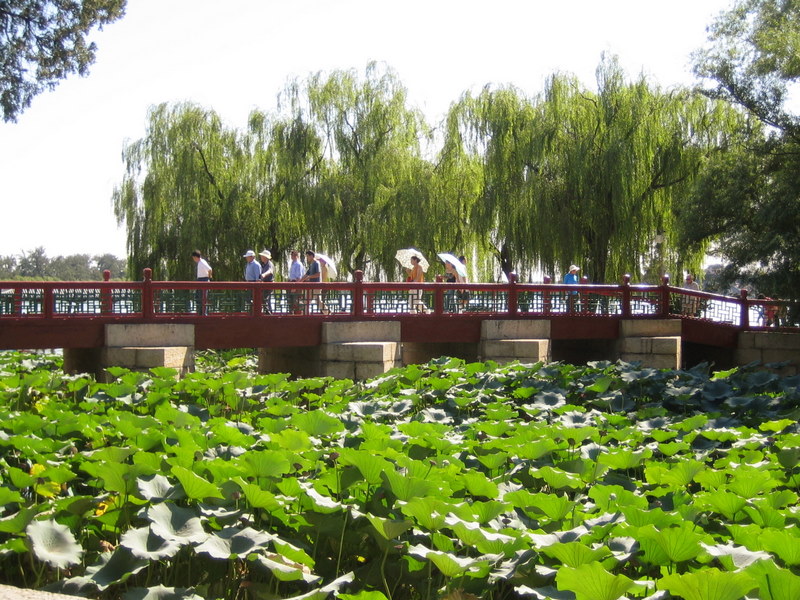
The Summer Palace, Beijing

The Summer Palace, Beijing

Come back and see me and join in the adventure!

Pin It on Pinterest