The Jews of Quito

One of the joys of visiting and revisiting places is that I get to see the same people time after time. I will be talking about the people I met in Quito, but to preserve their privacy, I won’t identify any of them.

The Quito Jewish Community has two major elements:

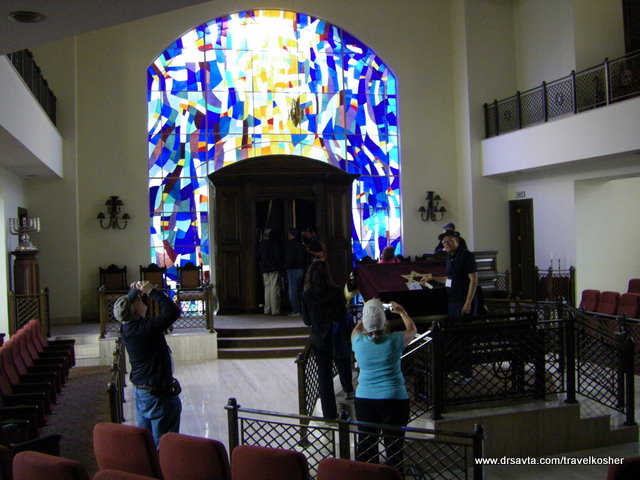
1. The large indigenous community that has a beautiful community center and a synagogue and lovely grounds. People in the community are of European origin, most of their families arriving before or during the Second World War. They number around 500 and have a community school of high academic quality that has a non-Jewish majority and afternoon religious school for other children in the Jewish community. The community is a Conservative community and so people who live throughout the Quito area can belong and attend services there. We were lucky enough to visit their complex and to see their synagogue.

After entering the complex, one sees two buildings with a patio area between them. To the left is the huge auditorium/banquet hall, said to the be second largest banquet hall in Quito. On the lower floor is a room that we used for lunch. It was also large and because the building was built on the side of a hill, it had large windows and an outdoor area as well. Further to the left outside is the swimming pool.

On the right is the synagogue building itself. Although the congregation president did speak with us about the community, we were not able to take a full tour of the facilities since we still had a lot to do and wanted to get back to the hotel well before shabbat so that people would have time to prepare.
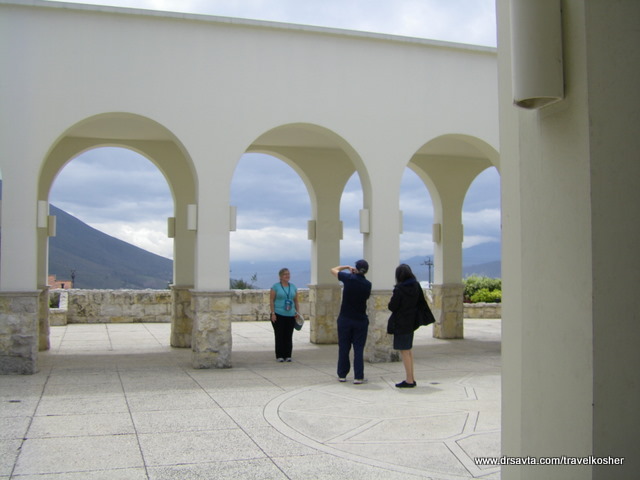
The synagogue grounds

The synagogue grounds


The doors and entrance hall
The doors and entrance hall


The synagogue interior

The synagogue interior


Synagogue under attack by camera-wielding tourists

Synagogue under attack by camera-wielding tourists


The inside of the domed roof

The inside of the domed roof


2. The Israeli/Orthodox element
The first two times I visited Quito, I became acquainted with these people. They are almost all ex-patriots living in Quito for various reasons. Although it is possible to acquire many kosher products in Quito, the lack of the thriving Orthodox community means that they need to rely on each other to be neighbors, friends, and family. They do not have a synagogue and so they lean on each other when they need strength. Watching them interacting with each other is something special. They have become a family, accepting of each other, caring, and warm. They enjoy seeing and playing with each other’s children. When they came to spend shabbat with us, the visiting Israelis/ Australians/ Americans they were open and friendly and simply nice people. They joined in our tfilot (prayers), zmirot (songs), and divrei torah (homilies.) By now, returning to Quito is a bit like visiting family.
Steak for dinner or no dinner at all?

On my recent tour of Ecuador and Peru, our travelers had requested to see a bullfight. Traditional bullfights being rather bloody and gory and altogether inappropriate for a religious group, we chose instead to go to a bloodless bullfight.

We went to a beautiful hacienda not far from Otavalo, Ecuador, and had lunch there, prepared by our own chef, Boaz under the supervision of our mashgiach, Eyal. Lunch was delicious.

After lunch we were invited to the bull ring. We were told that this is a place where aspiring bullfighters are trained and the bull itself is being trained for bullfighting. The bull was kind of small and didn’t have much desire to perform, but he was persuaded by waves of the cape and the footwork of the matador.

After a demonstration, volunteers were solicited. To my dismay, our chef and our mashgiach both volunteered to fight the bull. Someone rightly called out, “anyone but the chef, please!” The chef was a pleasant young man who produced fantastic meals in the most unlikely places. The mashgiach was a delightful young man whose wife is soon expecting their first baby. Neither one was expendable.

But fight they did. Here’s how it started:

And here’s how it ended:

As we say in Hebrew, Kol HaKavod! Way to go, guys!

Who was that masked man?

At about 8:00 p.m. Monday, I left my home for the airport for the trek to South America. I met my colleague who also will be working on the tour with me. After an easy check-in, we boarded the plane close to on time and settled into our seats. The configuration of the plane was 3/3/3. She and I had the two aisle seats on one row in the center section. For a long time it appeared that the middle seat might remain unoccupied. The only tell-tale clue was someone who had walked past us and when asked by the flight attendant where his seat was, he replied, “it’s the jump seat.” Yes, the plane was that packed, and so in a while we greeted the person who was to sit between us on this 15 hour trip.

He was a young man who had come to Israel as a tourist and to visit friends. He is an English teacher in Sao Paulo, and his English was pretty good. Of course, over the duration of the flight, we had some time to talk. When he heard that we had some hours in Sao Paulo, he wrote down for me information about where we should go and how to get there and back.

When finally we reached Sao Paulo and ascertained that our luggage had been checked through, he said that perhaps instead of taking the bus that he had originally recommended, we join him in his taxi that he had ordered. He said that they would be passing through the center of the city and it was not a problem to drop us off.

Of course we agreed. He told us that this taxi driver was wonderful, very reliable- and that’s why he had him pick him up at the airport. As we rode, our friend told us about Sao Paulo—what a huge city it is! He also told us a lot about the Jewish community which has 5 non-ultra-Orthodox day schools! He didn’t know how many ultra-Orthodox day schools there are. One school, established by Safra for his sister’s children, hires teachers who will teach in English so the children become fluent in English and are able to study abroad. Of course the children also learn Hebrew.

He and the taxi driver (who spoke no English) talked about our taking a bus back to the airport and about where we might find the bus. Then the taxi driver suggested that he transport us back to the airport for less than we would have to pay for a bus. Naturally, we agreed. After all, our friend had told us that the driver was reliable.

As we neared the center of the city, the taxi driver suggested that he keep our carry on bags for us. The truth was that our carry on bags were pretty heavy and we knew that it would make things easier for us. He told us that he would not be transporting anyone with luggage and that our bags would be safe.

We had his business card and we had the recommendation; it sounded good. As we left the taxi, we agreed to meet at the same location at 3 p.m. As we left, the driver gave us an umbrella to use since it was drizzling.

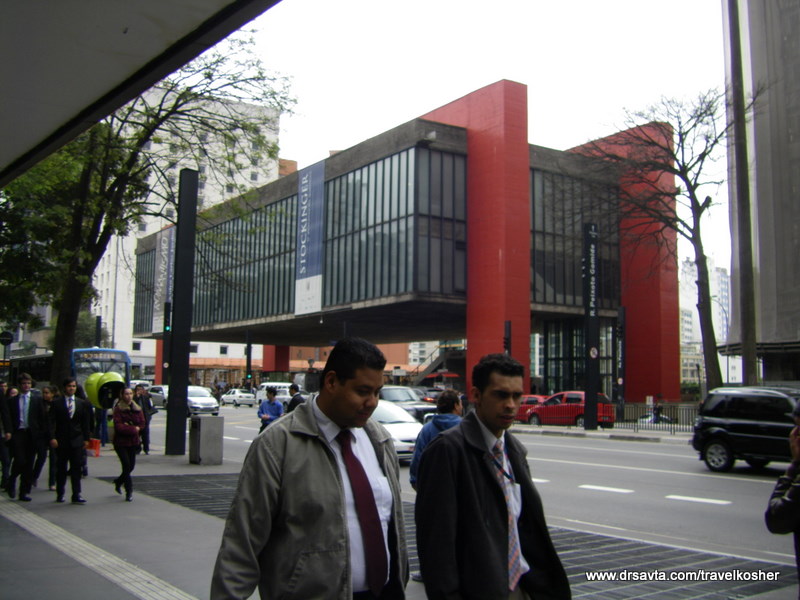
We walked through the park and then saw across the street an amazing building that our friend recommended we visit. It was the Museum of Contemporary Art. Museum of Art, Sao Paulo There was a long line of people waiting to get in. I went to ask how much a ticket was. It turned out that today, entrance to the museum was free.

The exhibit was wonderful. There were both European and South American artists represented and the exhibit was well narrated in English as well as Spanish. There was even a wonderful exhibit and video on the restoration of one of the pieces that was exhibited.

After our museum visit, we just walked and looked at the city. Close to 3 o’clock the two of us started to think about what we had done—leaving our carry-on bags (each containing our notebook computers and all of the information relevant to our tour) in the taxi of a person we didn’t know. Yes, we had his card and I had taken a photo of his license plate (because I wanted a photo of a Brazilian license plate), but how much good would that do us if we wanted to be on a plane in 2 hours…

We waited from about 10 minutes to the hour. We watched taxi after taxi pass. We began to doubt ourselves and then, on the dot of 3 o’clock, the driver pulled up to the curb and took us to the airport. He charged exactly what he said he would charge and our carry-ons were completely intact.

It was perfect.

Our only question… we never got the name of our benefactor from the plane. Who was that masked man?

A digression about Peru

I have been extremely busy for the last 3 weeks, having just returned from South America. Now, 2 surgeries (one mine, one my grandson’s), two sets of guests at my home, one major surprise birthday party (my husband’s) and 9 days of mourning ending on Tisha B’av– later, I am about to leave for my next tour to the same area. So, instead of continuing with the saga, I want to tell you about something that happened during my most recent tour.

Our group was an amazing collection of people. Most were Australians with some Anglo-Israelis, some Americans, and others. They were intelligent and fun-loving and they behaved like one big happy family. Traveling with them was delightful.

One day we went to a town in Peru called Pisac. It is located in the Sacred Valley and it has Incan ruins and a beautiful market. While there, one of the ladies saw a skirt that one of the local ladies was wearing and she really wanted to buy one like it. I assume that she looked for it in the market, but she obviously didn’t find it.

She finally asked our Peruvian guide to help her buy it from the woman who was wearing it. Peruvian women wear straight skirts under their brightly colored, embroidered outer dirndl skirts, so when they reached an agreeable price, the Peruvian woman removed her skirt and gave it to our traveler. When she got on the bus and told us that she had successfully purchased the skirt, everyone laughed and also applauded. Then someone said, “Well, that’s great, but what is she going to say when she gets home and her husband wants to know what happened to her skirt.” Our traveler said, “That’s not a problem; after I bought her skirt, he offered to sell me his pants!”

Women in market at Pisac

Women in market at Pisac

Note the beautiful skirt. Note also that one Peruvian woman was carrying her pet llama and the other has a child who is carrying one. The people posing with the Peruvian women were members of our group, but not the proud owners of a Peruvian skirt.

Galapagos Islands, Part 12 of the Ecuador, Galapagos, Peru Tour

The islands are alive. One feels there like a visitor and often like an interloper. On Espanola Island, we encountered a greeting party. Of course we saw the sea lions who as always were playful and fun. They always are either playing or lazing around in the sun. Maybe that’s why I find them so amusing. They live a life most humans would envy. These guys were taking it easy.

Seal lions on a break

Sea lions on a break

We also were greeted by marine iguanas

Marine iguanas

Marine iguanas

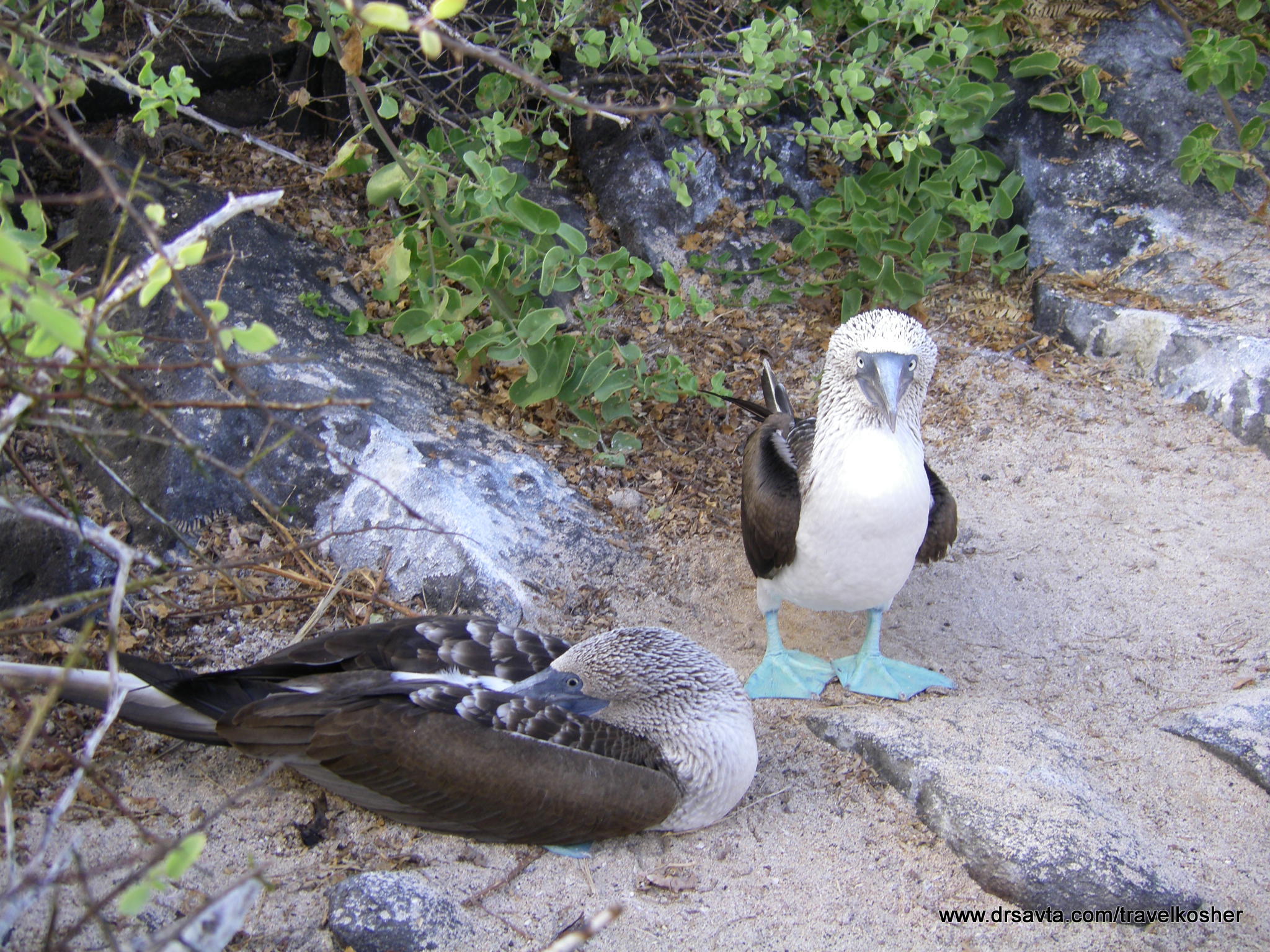
But most surprising was the blue footed booby welcoming committee. About every 10 feet, there was a couple of blue footed boobies standing along the trail. It was as if someone had placed them at their posts. Here they are:

Blue footed booby welcoming committee

Blue footed booby welcoming committee

Another couple

Another couple

And another

And another

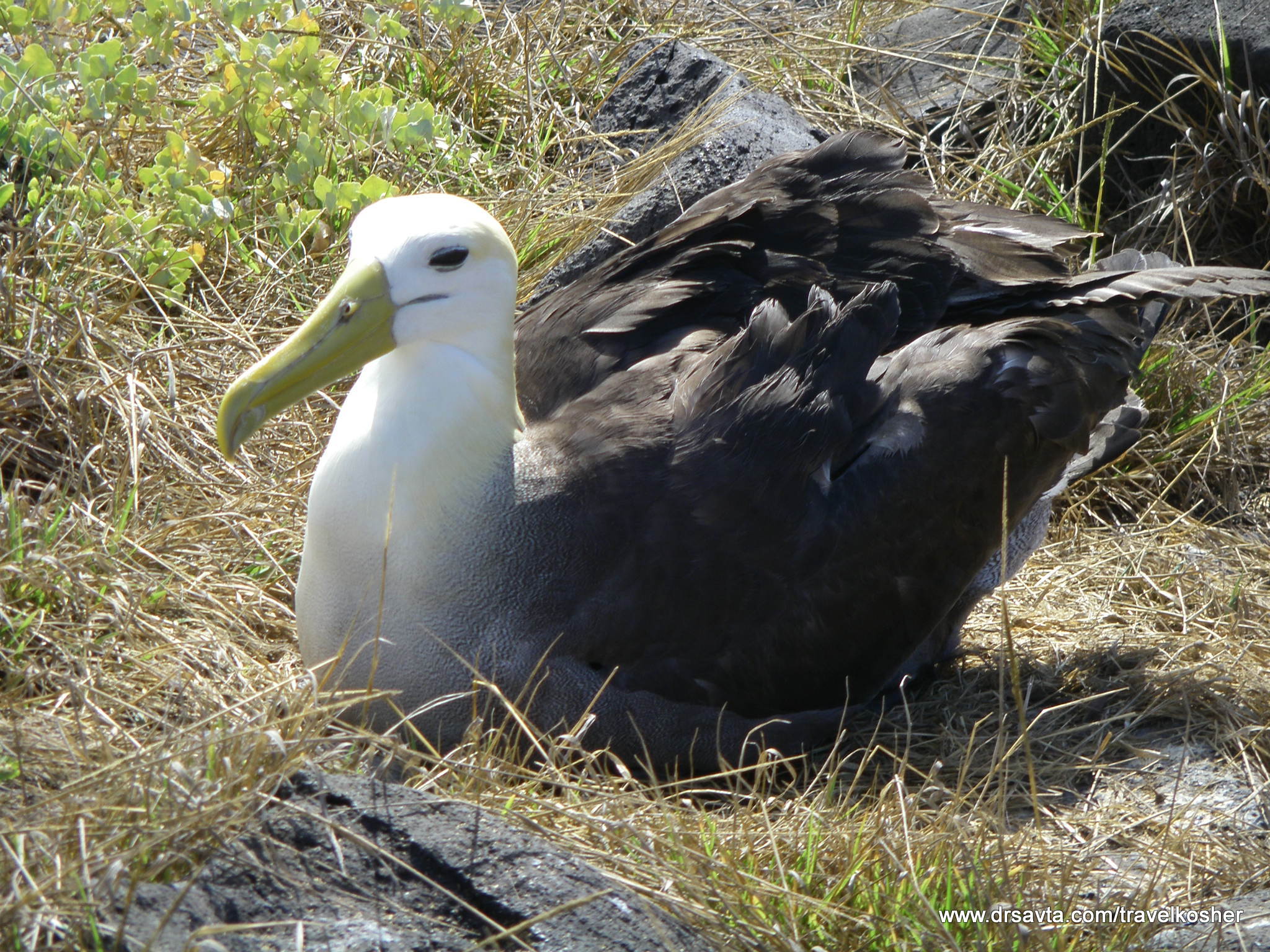
The big treat, though, was to see the albatrosses. In June, they were everywhere. In January, there had been only one or two sighted. So here is one, up close and personal:

An Albatross

An Albatross

Even closer

Even closer

Of course, once again we saw the Nazca boobies, really beautiful white birds.

Nazca boobies

Nazca boobies

Unfortunately, our visit to the Galapagos had to come to an end, but next is a glimpse at Lima, Peru!

Galapagos Islands, Part 11 of the Ecuador, Galapagos, & Peru Tour

One of the most amazing things about traveling to the Galapagos is the sense one has of not needing to speak. The landscape, the animals, and the birds are all just there for us to enjoy. Each time we went to visit another island or another location on an island, it was a new experience even though sometimes we would see the same animals and birds over and over again. Each time was special.

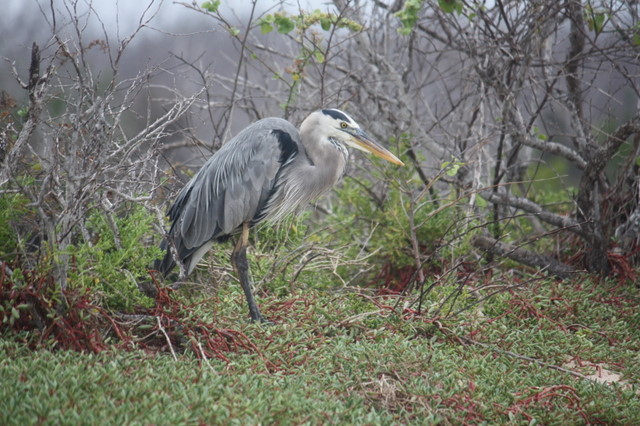
Great Blue Heron

Great Blue Heron

This bird has to be one of the most magnificent sights I have ever seen. And, like the other Galapagos birds and creatures, he was not frightened by the humans and held still for a good number of pictures.

Cactus trees

Cactus trees

Lava Lizard

Lava Lizard

Another amazing critter!

Nazca or Masked Booby

Nazca or Masked Booby

The Nazca Boobies are very beautiful and what is even more exquisite is a very young Nazca Booby. They are fluffy and white. Here’s a mother and her baby.

Nazca Booby and baby

Nazca Booby and baby

Flamingo

Flamingo

In certain light, it seems as if the endemic flamingos glow. They do not. They get their beautiful color from the sea animals that they eat.

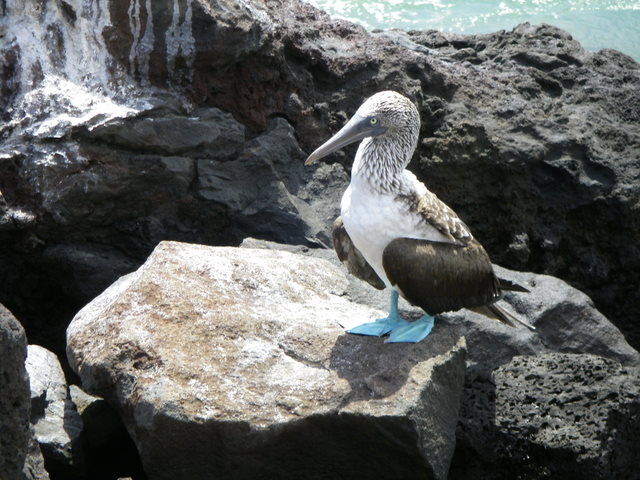
A cooperative Blue Footed Booby

A cooperative Blue Footed Booby

And yes, that is really the way they look. They tell me that it really attracts the girls (girl boobies, that is) which is a good thing.

What you can’t possibly imagine is how completely amazing this place is and how right the world seems with this beautiful life just living and thriving in a tranquil landscape.

And once again,

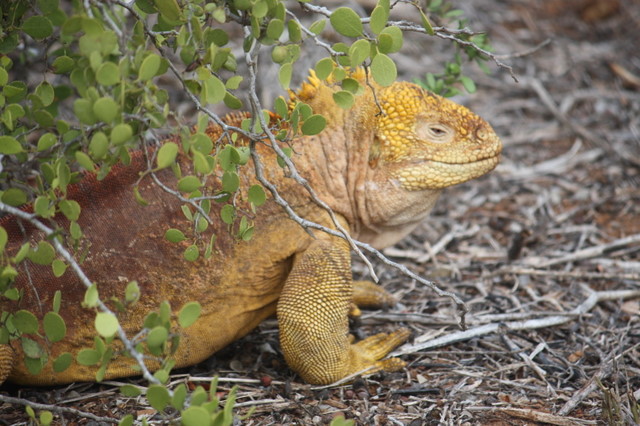
The Land Iguana smiles in approval

The Land Iguana smiles in approval

Galapagos Islands, Part 10 of the Ecuador, Galapagos, Peru Tour

We traveled to a number of islands and several locations on Santa Cruz Island. In each place there was tremendous beauty. For example, here is a swallow tailed gull.

Swallow Tailed Gull

Swallow Tailed Gull

I was very excited about the prospect of seeing blue-footed boobies. Even having seen a number, they still fascinate me. This is a picture of the first one we saw. He/she didn’t feel like cooperating with us, but at least didn’t fly away.

Uncooperative blue-footed booby

Uncooperative blue-footed booby

We saw this very beautiful bird.

Yellow Warbler (Canario Maria)

Yellow Warbler (Canario Maria)

A frigate bird

A frigate bird

Frigates are completely black as they fly through the sky. They look almost the way you would expect ominous black birds to look, except watching them fly was just beautiful. However, when they want to impress each other ( and particularly the female of the species) they can puff out a sac that is bright red (and actually, quite impressive.) Unfortunately, I didn’t get any good pictures, but you can see some magnificent pictures of magnificent frigates here.

I tried to identify the next bird with my handy-dandy identification guide. Unfortunately, the birds in my pictures are never in the same position as they are in the guide, and so I am just guessing that this incredibly gorgeous bird is a Royal Albatross.

Royal Albatross (?)

Royal Albatross (?)

A land iguana

A land iguana

These guys always smile. I know that they must just be the happiest characters.

And no island trip is complete if one doesn’t have a chance to see sea lions. This time it was a nursing mother and her nursling.

Sea lion baby snack time

Sea lion baby snack time

The Galapagos Islands, Part 9 of the Ecuador, Galapagos Islands, Peru Tour

Our first outing to an uninhabited area was to Bachas Beach which is located on Santa Cruz Island, but is far away from any human habitation or signs of civilization.

Bachas Beach

Bachas Beach

In the background you can see our ship, but otherwise, it was only we and nature. Bachas Beach got its name from a mispronunciation of the word “barges” as during World War II, US ships docked there in an effort to protect the Panama Canal.

As we walked onto the beach, I was overwhelmed with the peace and the natural beauty of the place, but looking further, it became clear to me that the island was full of life. Do you see it?

Life on the Island?

Life on the Island?

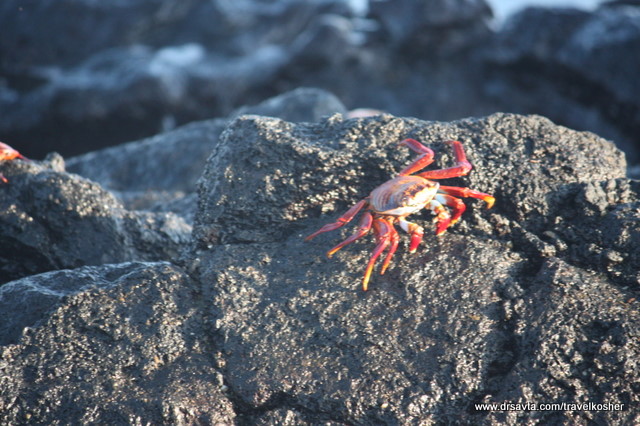
If you look carefully at the two pictures, you may be able to see some very small red/orange objects. They are Sally Lightfoot crabs. These crabs are strikingly beautiful. And they are everywhere. The entire rocky coastline is alive and moving!

A Sally Lightfoot Crab

A Sally Lightfoot Crab

Taking a walk

Taking a walk

Up close

Up close

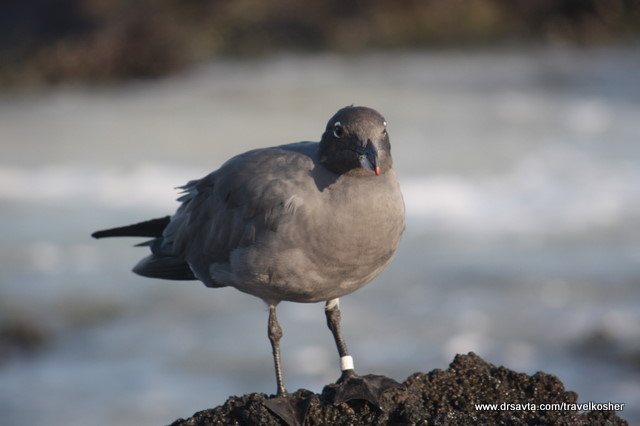
Here I was, on the fifth day of creation. I couldn’t believe it. The crabs did not shy away from the camera, nor did the Lava Gulls, who posed for pictures.

Lava Gulls

Lava Gulls

The Galapagos Islands are all about seeing and listening, and not so much about speech. In fact, one of the things I loved the most were the long silences when no one was speaking and when I was alone in this magnificent natural environment.

Lava Gull

Lava Gull

We saw some other creatures too. Here are two of them:

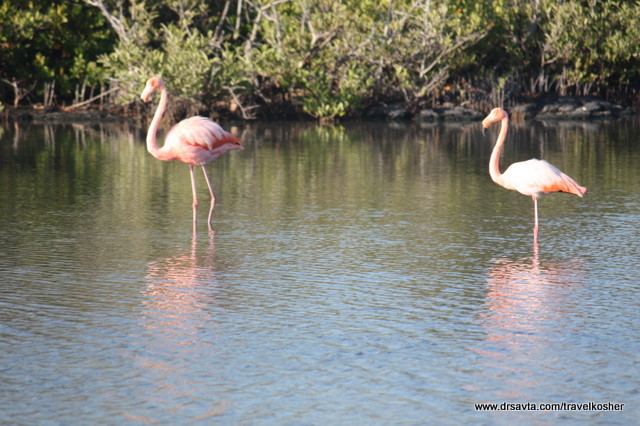
Greater Flamingos

Greater Flamingos

At first they were shy, but once they noticed that we were silent, they stopped hiding.

Our Flamingo Friends

Our Flamingo Friends

And who was there to say goodbye once our magnificent visit came to an end?

Sea Lion

Sea Lion

More fabulous creatures to come….

The Galapagos Islands, Part 8 of the Ecuador, Galapagos, Peru Tour

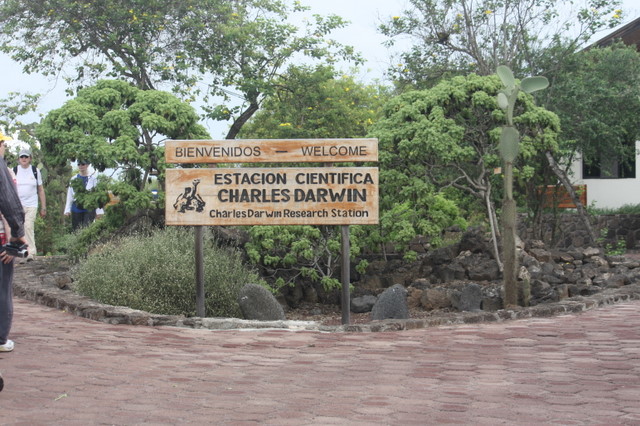
Finally we arrived at the Darwin Research Station outside of Puerto Ayora on Santa Cruz Island.

We have arrived!

We have arrived!

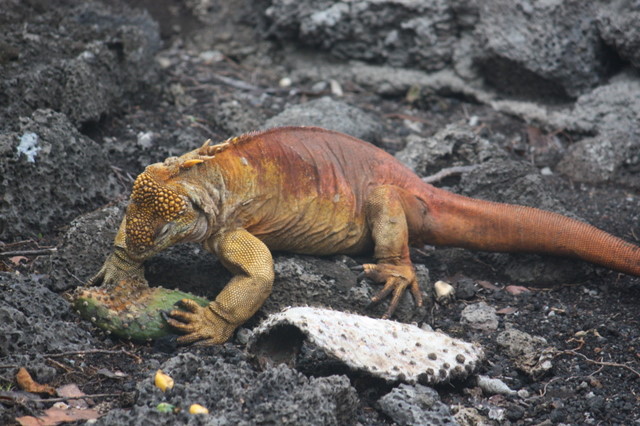
Our visit there was fascinating as we saw species of plants and animals that we had never seen before. One of the animals we came to know and love was the land iguana, a reptile so clever that it has learned how to eat cactus pads and get not only fluids from them in the dry season, but food value from them as well. Land iguanas vary from island to island in the Galapagos. They can grow to be as much as three to five feet long! Here is a land iguana eating a cactus pad.

Land iguana at lunch

Land iguana at lunch

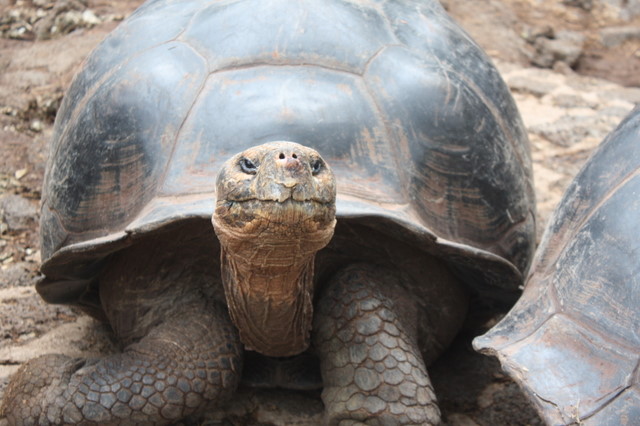
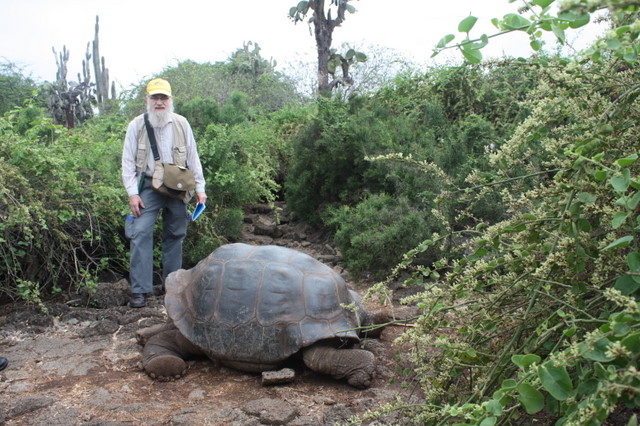
The major concentration at the Darwin station is the giant land tortoises. They too vary from Island to island with different shapes of shells and other remarkable differences. At the Darwin Station, scientists are concerned with preserving all of the existing species. There is, unfortunately one tortoise who is partnerless… Lonesome George is the last known existing tortoise of his kind. He was identified on Pinta Island and was brought to the breeding station in 1972. Since then he has waited in vain for a female Pinta Island tortoise. You can read more about him here.

We enjoyed seeing these enormous tortoises. Unlike what was permitted in the Galapagos Islands years ago, people are not allowed to ride on the tortoises. In fact, we are not permitted to touch them. The government of Ecuador takes very seriously the importance of preserving these islands and their air, land, and sea inhabitants– But we can take pictures!

Wow!

Wow!

My husband and his new pet

My husband and his new pet

and here’s something I thought I would never see:

Up close and personal!

Up close and personal!

When our tour of the station was over, we were satisfied and happy. We got back to the boat for a delicious kosher dinner and a restful night’s sleep, lulled by the gentle waves of the Pacific. What a wonderful day!!

The Galapagos Islands, Part 7 of the Ecuador, Galapagos, Peru Tour

I can’t remember a time when I was more excited about a non-life-changing event than I was on the morning we left for the Galapagos Islands. Births and weddings of course have long lasting implications that change entire futures, but visiting a new place? But it was not just that it was a new place. This was to be the adventure that would be unlike anything that I or anyone I knew had experienced before– something I had only dreamed of.

Our luggage was inspected thoroughly before we got onto the plane. Because the Ecuadorians are concerned that the Galapagos Islands remain a living laboratory, as untainted as possible by civilization, there is always concern that people might be bringing things that will destroy the unique ecology of each of the islands. For that reason, no plants, or seeds can enter the islands. Similarly, when we travel from the Islands to the boat, the bottoms of our shoes are washed off before we enter the boat so that we will not transport seeds from one island to another.

We flew from Quito to Guayaquil, Ecuador’s largest city and then on to the Galapagos Islands. Before we landed, the interior of the plane was sprayed.

The first thing we saw when we landed at the airport in Baltra was this tree.

Galapagos cactus

Galapagos cactus

We thought it looked unique. It seems to grow quite profusely in the Galapagos Islands.

The archipelago consists of 15 main islands, 3 smaller islands and over 100 rocks and outcroppings. Once we had claimed our luggage, we went by bus and ferry and bus to the ship’s landing in Santa Cruz. Santa Cruz is one of the 5 islands that are inhabited by humans.

Santa Cruz

Santa Cruz

From there we walked along the pier. I thought that we would see our ship, a small cruise ship that takes a maximum of 100 passengers.

The pier

The pier

It was raining and happily, it was the only rain we experienced during our visit there.

What I didn’t anticipate was our mode of transportation to the cruise ship and subsequently to each island. The islands are to remain unspoiled and so large ships do not dock near them, but stay removed from them so as not to pollute or to carry anything that might upset the ecology of the islands. So it was like this that we reached our ship.

The dinghies

The dinghies

And here is a picture of the ship

The Galapagos Legend

The Galapagos Legend

Once settled in, all of us were ready for our first big adventure. Late in the afternoon, we set out on our dinghies to visit the Darwin Research Station.

Imagine our surprise when we came upon a whole welcoming committee of marine iguanas who graciously posed for pictures!

Marine iguana

Marine iguana

and friend

and friend

The Marine Iguana is the world’s only sea-going lizard and is found only on the Galapagos Islands. We found them fascinating. We almost forgot that they were not what we were there to see. The Darwin Station is most concerned with the giant tortoises. You’ll see them next time…
Pin It on Pinterest